Oxford, Bodleian MS. Heb. c. 28.31
- Details
- Item Images (2)
- Graphic Elements (45)
- Specimens (1)
Details
Oxford, Bodleian MS. Heb. c. 28.31
Bodleian Library (Oxford, United Kingdom)
Writing
Paper
Brown (iron-gall)
Calamus
Ruling
No ruling
20+marginalia
Date
12th Century CE
Dating: probably January 1140 CE (though Goitein originally believed it to be 1129 CE, he later revised his dating and Friedman agrees). (Information from Goitein and Friedman, India Book IV).
Place
Egypt, Alexandria
Al-Andalus, Cairo, Fustat
Language
Judeo-Arabic
Document Text
Letter
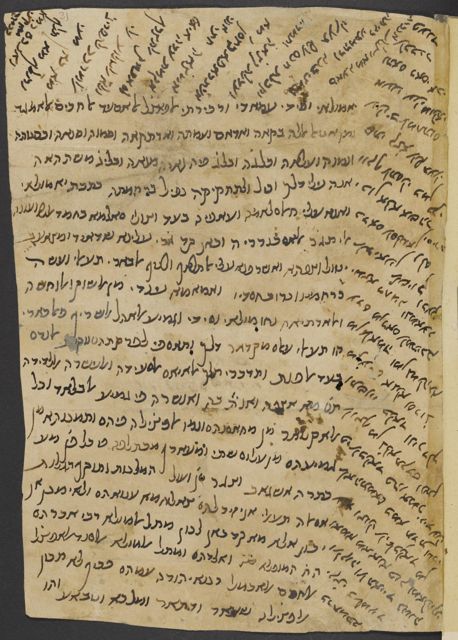
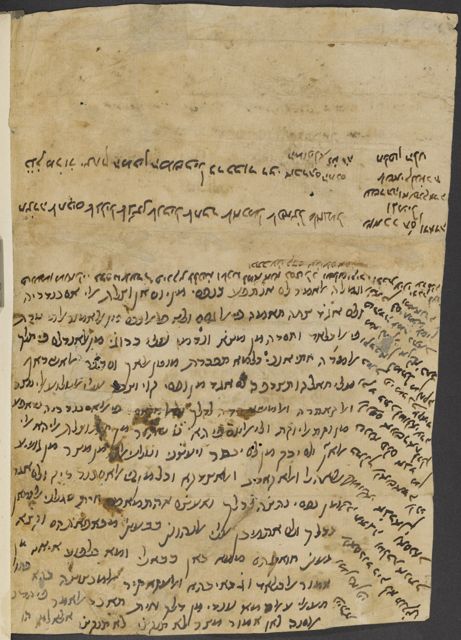
India Book IV, 17 (ח66). Letter from Ḥalfon b. Netanʾel ha-Levi, in Alexandria, to Yiṣḥaq Ibn ʿEzra, in Spain. In Judaeo-Arabic. The letter deals with the death of Ḥalfon's brother and other notables and the series of disasters that struck Ḥalfon and the community. Dating: probably January 1140 CE (though Goitein originally believed it to be 1129 CE, he later revised his dating and Friedman agrees). (Information from Goitein and Friedman, India Book IV.)
Goitein summarizes the letters as follows: "A perfect picture of the influence of emotions on physical and mental health is found in the long letter written by the noble India trader Ḥalfon b. Netanel nine months after his return to Egypt from a long sojourn in Spain. As expected from a man like him, he dedicates the first twenty lines to the praise of his gracious and learned hosts, whom he so greatly missed. Then he goes on to bemoan one after another the disasters that disturbed his mind: civil war, anarchy, the high cost of living in Egypt, the death of the Head of the Jerusalem Academy (which then had its seat in Cairo) and of several luminaries of the Jewish spiritual and social upper crust; hardly had the months of mourning for those passed when Halfon's misfortune was topped by the demise of his eldest brother, who was the president of the Jewish High Court of Justice. He found himself unable to act, even to supervise the unloading of his goods, and let the perishables rot. During his long stay in Alexandria his body and soul never enjoyed full health, but he was also unable to bring himself to go up to Cairo: how could he visit the place vacated by his brother? Family and friends came down to Alexandria to induce him to return home, but he did not find in himself nahḍa, energy, to do so. For this reason, he was also not in a position to send to his friends in Spain (mostly physicians) the pharmaceutical plants promised, for these were to be had only in the capital (the terminal of the India trade), not in the Mediterranean port. Nor for the time being was he in a frame of mind to continue writing the learned discussions that were started during his sojourn in Spain. He concludes with a refined twist; he really did not want to send this letter but he was overcome by yearning for his Spanish friends, and asks them, considering his state of mind, to overlook his shortcomings in style and script (in that order)." (Goitein, Med Soc V, pp. 243–44.)
Goitein summarizes the letters as follows: "A perfect picture of the influence of emotions on physical and mental health is found in the long letter written by the noble India trader Ḥalfon b. Netanel nine months after his return to Egypt from a long sojourn in Spain. As expected from a man like him, he dedicates the first twenty lines to the praise of his gracious and learned hosts, whom he so greatly missed. Then he goes on to bemoan one after another the disasters that disturbed his mind: civil war, anarchy, the high cost of living in Egypt, the death of the Head of the Jerusalem Academy (which then had its seat in Cairo) and of several luminaries of the Jewish spiritual and social upper crust; hardly had the months of mourning for those passed when Halfon's misfortune was topped by the demise of his eldest brother, who was the president of the Jewish High Court of Justice. He found himself unable to act, even to supervise the unloading of his goods, and let the perishables rot. During his long stay in Alexandria his body and soul never enjoyed full health, but he was also unable to bring himself to go up to Cairo: how could he visit the place vacated by his brother? Family and friends came down to Alexandria to induce him to return home, but he did not find in himself nahḍa, energy, to do so. For this reason, he was also not in a position to send to his friends in Spain (mostly physicians) the pharmaceutical plants promised, for these were to be had only in the capital (the terminal of the India trade), not in the Mediterranean port. Nor for the time being was he in a frame of mind to continue writing the learned discussions that were started during his sojourn in Spain. He concludes with a refined twist; he really did not want to send this letter but he was overcome by yearning for his Spanish friends, and asks them, considering his state of mind, to overlook his shortcomings in style and script (in that order)." (Goitein, Med Soc V, pp. 243–44.)
Vowels and Signs
No vowels or accents
Other
Bought through the Rev. Prof. Sayce, 1896 (from the Genizah).
990053399080205171
https://genizah.bodleian.ox.ac.uk/catalog/volume_36#MS_Heb_c_28-part12-item1 (Date accessed: 2025-12-16)
S. D. Goitein, Mordechai Akiva Friedman and Amir Ashur, India Book 4: Ḥalfon the Traveling Merchant Scholar (in Hebrew) (Ben Zvi Institute, 2013), vol. 4 B.
ח66
Miriam Frenkel, The Compassionate and Benevolent: The Leading Elite in the Jewish Community of Alexandria in the Middle Ages (in Hebrew) (Ben-Zvi Institute for the Study of Jewish Communities in the East, 2006), Doc. #2, pp. 240-247
Moshe Gil and Ezra Fleischer, Yehuda Ha-Levi and His Circle (in Hebrew) (ha-Igud ha-ʻolami le-madaʻe ha-Yahadut, 2001), p. 21
Available online through the Princeton Geniza Project at https://geniza.princeton.edu/documents/9271/ (accessed December 16, 2025).
ח66
Miriam Frenkel, The Compassionate and Benevolent: The Leading Elite in the Jewish Community of Alexandria in the Middle Ages (in Hebrew) (Ben-Zvi Institute for the Study of Jewish Communities in the East, 2006), Doc. #2, pp. 240-247
Moshe Gil and Ezra Fleischer, Yehuda Ha-Levi and His Circle (in Hebrew) (ha-Igud ha-ʻolami le-madaʻe ha-Yahadut, 2001), p. 21
Available online through the Princeton Geniza Project at https://geniza.princeton.edu/documents/9271/ (accessed December 16, 2025).
Item Images
Oxford, Bodleian MS. Heb. c. 28.31: 1r
Oxford, Bodleian MS. Heb. c. 28.31: 1v
Graphic Elements
Abbreviation
Oxford, Bodleian MS. Heb. c. 28.31: Abbreviation - #36513
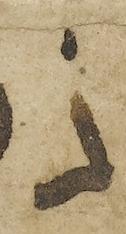
Oxford, Bodleian MS. Heb. c. 28.31: Abbreviation - #36549
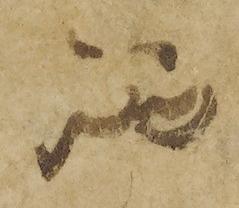
Divine Symbol
Oxford, Bodleian MS. Heb. c. 28.31: Divine Symbol - #36498
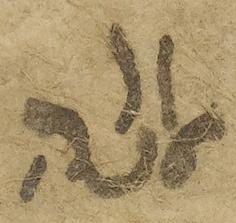
Oxford, Bodleian MS. Heb. c. 28.31: Divine Symbol - #36516
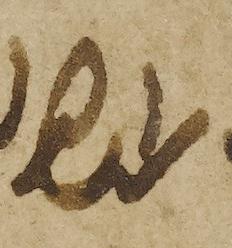
Justification
Oxford, Bodleian MS. Heb. c. 28.31: Justification - #36537
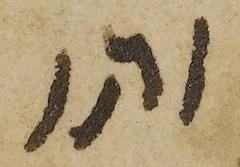
Oxford, Bodleian MS. Heb. c. 28.31: Justification - #36524
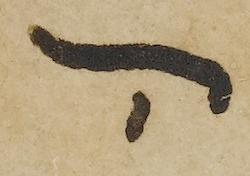
Letter
Aleph
Oxford, Bodleian MS. Heb. c. 28.31: Letter - #36500
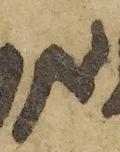
Oxford, Bodleian MS. Heb. c. 28.31: Letter - #36503
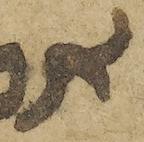
Oxford, Bodleian MS. Heb. c. 28.31: Letter - #36499
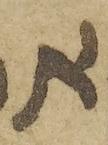
Oxford, Bodleian MS. Heb. c. 28.31: Letter - #36509
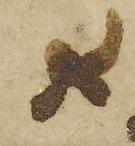
Beth
Oxford, Bodleian MS. Heb. c. 28.31: Letter - #36501
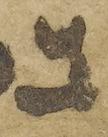
Gimel
Oxford, Bodleian MS. Heb. c. 28.31: Letter - #36508
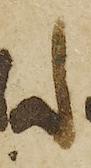
Daleth
Oxford, Bodleian MS. Heb. c. 28.31: Letter - #36540
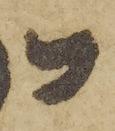
He
Oxford, Bodleian MS. Heb. c. 28.31: Letter - #36523
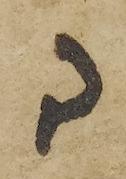
Oxford, Bodleian MS. Heb. c. 28.31: Letter - #36511
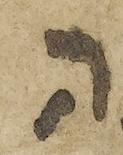
Vav
Oxford, Bodleian MS. Heb. c. 28.31: Letter - #36544
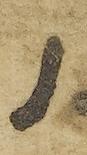
Zayin
Oxford, Bodleian MS. Heb. c. 28.31: Letter - #36542

Ḥeth
Oxford, Bodleian MS. Heb. c. 28.31: Letter - #36506
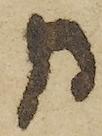
Ṭeth
Oxford, Bodleian MS. Heb. c. 28.31: Letter - #36532
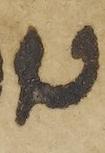
Yod
Oxford, Bodleian MS. Heb. c. 28.31: Letter - #36545

Kaph
Oxford, Bodleian MS. Heb. c. 28.31: Letter - #36514
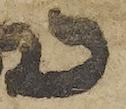
Kaph: final
Oxford, Bodleian MS. Heb. c. 28.31: Letter - #36536
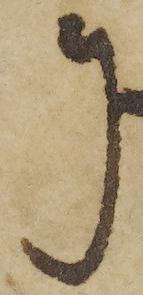
Lamed
Oxford, Bodleian MS. Heb. c. 28.31: Letter - #36541

Oxford, Bodleian MS. Heb. c. 28.31: Letter - #36546
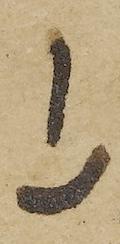
Mem
Oxford, Bodleian MS. Heb. c. 28.31: Letter - #36531
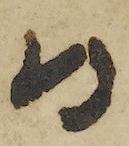
Mem: final
Oxford, Bodleian MS. Heb. c. 28.31: Letter - #36507
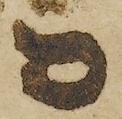
Nun
Oxford, Bodleian MS. Heb. c. 28.31: Letter - #36539
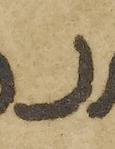
Nun: final
Oxford, Bodleian MS. Heb. c. 28.31: Letter - #36550
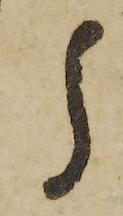
Oxford, Bodleian MS. Heb. c. 28.31: Letter - #36526
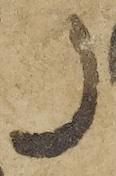
Samekh
Oxford, Bodleian MS. Heb. c. 28.31: Letter - #36522
'Ayin
Oxford, Bodleian MS. Heb. c. 28.31: Letter - #36518
Pe
Oxford, Bodleian MS. Heb. c. 28.31: Letter - #36534
Pe: final
Oxford, Bodleian MS. Heb. c. 28.31: Letter - #36529
Ṣade
Oxford, Bodleian MS. Heb. c. 28.31: Letter - #36520
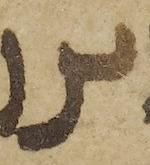
Ṣade: final
Oxford, Bodleian MS. Heb. c. 28.31: Letter - #36548
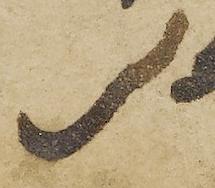
Oxford, Bodleian MS. Heb. c. 28.31: Letter - #36543
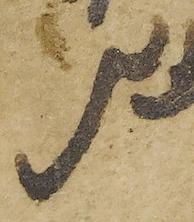
Qoph
Oxford, Bodleian MS. Heb. c. 28.31: Letter - #36527
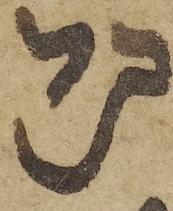
Oxford, Bodleian MS. Heb. c. 28.31: Letter - #36510
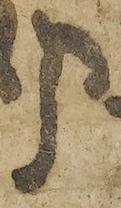
Resh
Oxford, Bodleian MS. Heb. c. 28.31: Letter - #36535
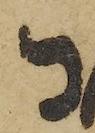
Shin/Sin
Oxford, Bodleian MS. Heb. c. 28.31: Letter - #36512
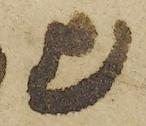
Tav
Oxford, Bodleian MS. Heb. c. 28.31: Letter - #36502
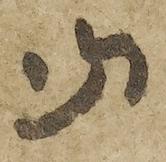
Ligature-Connected
Oxford, Bodleian MS. Heb. c. 28.31: Ligature-Connected - #36533
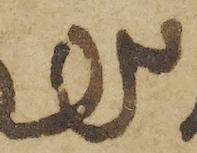
Nexus
Oxford, Bodleian MS. Heb. c. 28.31: Nexus - #36547
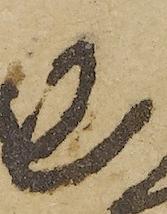
Oxford, Bodleian MS. Heb. c. 28.31: Nexus - #36530
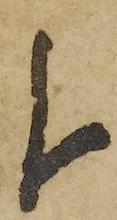
Oxford, Bodleian MS. Heb. c. 28.31: Nexus - #36505
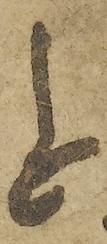
Specimens
Oxford, Bodleian MS. Heb. c. 28/31: Main text scribe - Non-square (Beinoni)
Bodleian Library (Oxford, United Kingdom)